12.10.2006

Puts Me to Shame


Surfn' Poetry? These guys live it (New York Times. Free Registration Req'd).

12.07.2006

Conversation in one of my Grad Classes

student: I think a lot of things depend upon the suspension of disbelief.
me: Wow! I just blogged about that yesterday.
student: I don't read your blog. Sorry.
me: Oh.

12.06.2006

Chuck Klosterman

Chuck Klosterman has a great take on some of the connections between contemporary sports publicity and hip-hop culture at ESPN. Klosterman (who penned the bestseller, Fargo Rock City) meditates on these connections and whether or not the iconic Muhammad Ali invented rap. Klosterman's column takes an interesting turn when he describes the critics of both music and sport.

*snip*
Sports columnists and rock critics have a lot of qualities in common (more than most readers realize, I suspect). Chief among these similarities is a sense of arbitrary righteousness: Sportswriters and music writers are appalled anytime they get what they once pretended to want. In the '80s, tennis writers complained John McEnroe and Jimmy Connors were obnoxious and undignified; today, tennis writers3 inevitably insist men's tennis is boring and that we need a new Super Brat. Whenever musical acts become obsessed with import and authenticity (i.e., U2 during the "Rattle and Hum" era), pop critics find them egocentric and ridiculous; the moment those same musical acts embrace artifice and grandiosity (i.e., U2 on the 1997 "Popmart" tour), those same critics question their integrity. Whenever you deliver anything to a sports columnist or a rock critic, they will want its opposite. And this is especially true when the (mainly) white media covers the (mainly) black worlds of football, basketball and mainstream hip-hop.4 In both instances, journalists remain simultaneously fixated on two paradoxical positions:

(1.) Most athletes/artists are boring because all they do is repeat safe, meaningless clichés.
(2.) The few individuals within these idioms who do say provocative, controversial things are ill-informed media whores who should be more grateful that they are rich.
*/snip*

da*n straight, Chuck.

12.05.2006

Is a Game an Argument?

Tiny asks a good question in a comment to my last post. (Go ahead and read the comment. I'll wait).

Ready? O.K. I suppose if a novelist's only argument is "buy my book," then yes, that is the main argument for a game designer (and I think that, at some level, that is part of the thinking. Otherwise, they would probably stick to drawing on their walls, or something more obscure). I don't really accept that reason in toto, though, because there are much more lucerative things talented creative people can do. Moreover, the aspersion that if "filthy lucre" is involved it taints the artifice/argument would have to be applied across the board. Rhetors and artists are involved in things that generate money. Richard Lanham calls this the "fluff" necessarily attached to "stuff" in his book The Economics of Attention. Rhetors/artists create attention-capturing configurations of words/images/textiles/sounds/etc. in order to generate particular creative changes in larger contexts. Art may be for sale, and may even generate sales, but they also change things in the larger culture not immediately connected to points of sale.

Beyond this argument that has been made by other, far more articulate, scholars and theorists, I think that game designers and artists involve themselves in two important, and different aspects of the gaming complex.

1.) These designers are materially interested in continuing, and extending, extant aesthetic regiemes. The recent release of the PS3 and the Wii exemplify the two dominant sides of the debate. The PS3 appeals to those who want to extend the realism/naturalism paradigm further--the same regieme that was extended by Halo 3 (if you haven't seen the new commercial for Halo 3, I would recommend watching it for a quick synopsis of the realist/naturalist theme. It really captures the flavor of the "evil is inevitable, so we should give in and immerse ourselves in its aesthetic (all the while, removed from it as a representational cyborg). The other regieme is represented by the more optimistically ludic Wii. The non-photorealistic representation of the game offerings, as well as the embodied sociability (with all of the ridiculous movements you have to make in a social setting) emphasize a particular optimism. Because we are basically "good," it's O.K. to be ridiculous. Whearas the realism/naturalism isolates the individual in a mythic-heroic figuration, the optimistic/embodied-sociable emphasizes connection through silliness.

So, when game designers and artists give nods to particular game precedents, they are at least acknowledging who pays the bills. Moreover, they are acknowledging that they at least "buy in" to the culture they are building upon--the culture of lan parties, couches, sleepovers, online death matches, finals week steam-blowing tournaments, etc. Many of these designers met significant others and friends this way, so I would be surprised if many of them did NOT believe in game culture in some deep and significant way.

The "suspension of disbelief" genre conventions reinforce and reify cultural conventions about sociability (much the same way detective novels still reinforces Edgar Allen Poe's "following the trail" narrator sifts through narratological details to "reveal" [create, really] individual responsibility).

2.) One of the rhetor's main tasks is to reinforce cultural conventions through reification. The epideictic rhetor praises and blames in order to craft the public role of hero or villain ("Helen is not to be blamed for the Trojan war" reinforces the heroism of those who would launch the ships as more than "silly boys"). The forensic lawyer struggles to find the point of argumentation in order to reify his defendant as a not guilty person. Long after each game is sold, hours and hours are spent with each game copy constituting and arranging groups of people around the roles that are allowed within and around the game. As Q-Olin notes, the social configurations these games allow, reinforce, and reify are bleeding into other genres, like talk shows and mashups.

12.04.2006

Genre Theory


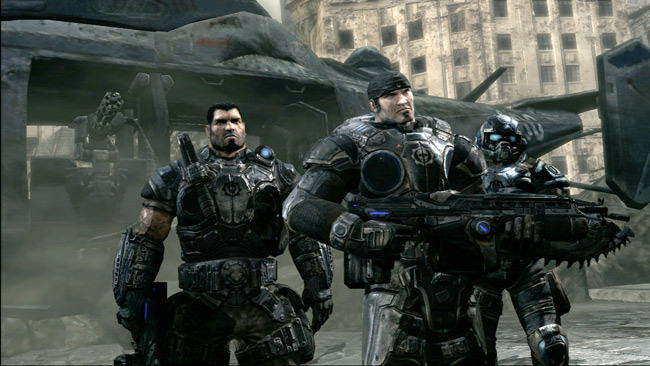
Clive Thompson, over at Wired Magazine has a reasonably good discussion of the importance of genre embedded in his review of the new first-person shooter video game Gears of War. Thompson has an instrumentalist ham-fistedness with passages like this:
*snip*
Consider the sonnet. It's been around ever since Italian poets invented it in the 13th century, and it's deeply formulaic. But it's never gotten boring, because poets keep on finding surprising new ways to hack it. The Earl of Surrey remixed the sonnet's 14 lines into a new stanzaic structure, turning it into a four-part argument and spurring Shakespeare into an orgy of creativity. Then e e cummings tore the sonnet into tiny shreds, splaying the words across the page while using the rhyming structure to hold each poem together.
/*snip*
Still, he is on to something important about Ciceronian eloquence residing in the familiar. While New Media practitioners and theorists stretch to find the theoretical increments that matter (the mode? the medium? the metaphor?), the rhetors who manage to convince large numbers of people that THEY have something different will end up being the ones who define the important conventions and variations. Game designers are some of the most important rhetors of our time, IMHO.

12.03.2006

Weird, Magical Ride

The Bison basketball team is continuing its magic carpet ride. Even though they cannot go to the NCAA tournament for a few years, this mostly sophomore team fearlessly enters lions' dens and wrestles these beasts to the ground. This same group did the same thing to a ranked Wisconsin team last year, almost took town Texas Tech in Lubbock, and came back on Princeton two days ago.

I would say that I'm surprised, but every time I move to a school, this same scene unfolds.
-My first year of High School, the football team goes to the State Championship Game.
-My first year of Undergraduate school, the football team makes the playoffs for the first time in memory. My tennis team also starts its ascent back to the NCAAs.
-I started going to Penn State in 1994 (Not unprecedented, but I have yet to see as good of an offense in college football).
-The year I started the University of New Mexico, Dennis Francione took UNM football to a bowl game--the first since the 1960s.
-When I started teaching at Bowling Green State University, Urban Meyer had just turned around what used to be one of the worst football teams in the country. I got to see them go to a bowl game.

Frankly, I'm a bigger basketball fan than I am a football fan (I played organized football in high school and tennis in high school and college, but I always loved playground basketball the best), so I'm enjoying the scrappy Bison roundballers most of all.

Nice work gentlemen.

12.01.2006

Marcel Marceau of Memes

Scott Eric Kaufman is conducting an experiment on the propagation of memes, the results of which will be part of his talk at said panel. He's asking people to post entries about his entry, link back to the original entry, and then ping Technorati (if your blogging platform doesn't already do so automatically). That's all. And to make it easy, all you really need do is to copy and paste this very paragraph, formatting in the links to Scott's entry and to Technorati, then visit Technorati and enter the URL for your own entry. That sounds like more work than it actually is. And the reward is that you'll be contributing to Science™.

From Wired Magazine

Absolutely chilling:

*snip*
The bill, SB1666, was written by state Sen. Debra Bowen, and would have barred investigators from making "false, fictitious or fraudulent" statements or representations to obtain private information about an individual, including telephone calling records, Social Security numbers and financial information. Victims would have had the right to sue for damages.

The bill won approval in three committees and sailed through the state Senate with a 30-0 vote. Then, according to Lenny Goldberg, a lobbyist for the Privacy Rights Clearinghouse, the measure encountered unexpected, last-minute resistance from the Motion Picture Association of America.

"The MPAA has a tremendous amount of clout and they told legislators, 'We need to pose as someone other than who we are to stop illegal downloading,'" Goldberg said.
/*snip*

11.30.2006

Fringe Benefits

As the daylight window here gets ridiculously short, and I attempt to hold onto my almost-winter sanity, I am noticing one fringe benefit. The bleakness drives me past my usual hesitation to cold-email old friends ("THIS will cheer me up!"). That isn't the main benefit, though. The benefit is the fre-e-e-z-z-ing weather that I can bravely dismiss as I strike up new conversations with old friends ("it's not SO bad once you get the gear."). I used to think that Garrison Keillor was being folksy and (as the NY Times has stated on multiple occasions) perhaps a bit condescending. I mean it doesn't REALLY get to 20 below...right?

No, he's not a storyteller as much as he is just reporting what he sees. Every other person really is Lutheran and Scandinavian. Hell, sport and I walk by the Kringen Lodge every time we go downtown.

Yeah, not having to rely on glossy fictions for conversational detail and having conversational inhibitions beaten out of you by the weather helps the old writing process. Just ask Mr. Keillor.

11.28.2006

Did Someone Not Send Me the Memo?

Seems like every sportsmedia sycophant (at least college football types) are trying to distract fans from the current BeeCeeeSs pileup. No change there. Lots of avoidance of asking why a non "major" conference unbeaten like Boise State deserves to be shut out of the championship ("wrong pedigree Chaz!"). Not so much questioning how to sort out the haves from the almost-haves (unless, of course, lazy couchmanship counts).

What REALLY puzzles me in this mess is how the great majority of the sports-pundocracy agrees that the University of Florida in no way deserves a shot at the BCS title game. In understand lining up behind Ohio State U (kind of) with a few impressive, barely-eked home victories. What I find puzzling about the Florida exclusion is how a late-season home spanking of a middle-of-the road team like Notre Dame outweighs a loss to Oregon State and a boatload of near-miss comebacks against a pretty weak Pac-10 conference. Nevermind the fact that Boise spanked Oregon State (lots of spanking to go around, apparently). I also can't figure out why people didn't put a big fat * next to the Auburn "loss," when an officiating flub contributed so mightily to the game outcome (boo hoo for Oklahoma, but *cough* for Florida, apparently).

Michigan can make a case for the championship game, but late losses traditionally count more than early losses...unless you are talking about THIS year...and talking about Florida.

Did I miss the memo that told sportscophants they must. avoid. discussion. of. Florida's. merits? I think that the *usual* rules that apply to artibrary football rankings (late losses, strong conferences, more victories, close rivalry games not counting for style points, etc.) have been summarily changed. They are so well known that conferences reschedule potential early losses (Florida State vs. Miami, for example) in order to maximize their conference's chances to get two BCS bids.

Who got the memo?

Nice Take over at Collin vs. Blog

Collin does a great job tying some threads together on the temporal and epistemological transformation of a folksonomy to a taxonomy.

11.26.2006

Wisdom of Crowds?

From the Time Magazine cover story:

*snip*
REAL AND PERCEIVED RISK

It's not impossible for us to become sharper risk handicappers. For one thing, we can take the time to learn more about the real odds. Baruch Fischhoff, professor of social and decision sciences at Carnegie Mellon University, recently asked a panel of 20 communications and finance experts what they thought the likelihood of human-to-human transmission of avian flu would be in the next three years. They put the figure at 60%. He then asked a panel of 20 medical experts the same question. Their answer: 10%. "There's reason to be critical of experts," Fischhoff says, "but not to replace their judgment with laypeople's opinions."
/*snip*

A former student of mine (hat tip to Angel) wrote her thesis on this gap between risk perception and risk analysis. Her recommendations look a LOT like the ones offered in this article.

And don't even get me started on the role that fear-mongering and caricature contrarian (a.k.a. John Stossel) journalism play in semiotically wrecking our sense of risk...

11.25.2006

"The" Problem with Dissoi Logoi

The New York Times has a pretty decent article (free subscription required) on the competition to attract talented young professionals to American cities.

Richard Florida's (author of Rise of the Creative Class) is prominently cited in this article, as he is the most visible proponent of the idea that attracting creatives to a region can help that region's economy. One of Florida's most vocal critics, Joel Kotkin, points out that amenities are not a particularly effective way of attracting these creatives. To be fair, Richard Florida does not call for amenities in either his research OR his popular books. Instead, he correlates creative class density to the three "Ts" of talent, techology, and tolerance. This final "tolerance" is where critics like Kotkin seize upon Mr. Florida's thesis (usually only hinting at "teh gays" meme in order to inflame while insisting on oblique ad hominem attacks and never quite laying out the logic of his argument). I have called Kotkin on this argument in his blog and in correspondence, but I think there is a deeper structural problem with the entire Creative Class Regional Economic development argument.

This excerpt from the NY Times article gets a little closer to the heart of the problematic either/or argument:

*snip*
Still, what works in one city will not work in others, Mr. Cortright said, and not all young people are looking for the same things. He cites Portland’s bike paths, which many point to as an amenity that has helped the city attract young people.

“I think that confuses a result with a cause,” Mr. Cortright said. Portland happened to have a group who wanted concessions for cyclists and was able to get them, he said.

“The real issue was, is your city open to a set of ideas from young people, and their wish to realize their dream or objective in your city,” he said. “You could go out and build bike paths, but if that’s not what your young people want, it’s not going to work.”
/*snip*

While the sophists were definitely onto something with their dissoi logoi method of argumentation (splitting any argument into two, opposed sides), a method that works well in an agonistic arena, it does some serious violence in situations where people must come together around a solution. The correlation/causation argument might be resolved in a vacuum, but when Richard Florida trots off to cities across the globe and gives the veneer of respectability to amenities projects and lifestyle solutions (like gay-friendly developments, etc.) it makes it tough to argue the "face value" of his stated premises of the three Ts. Furthermore, the correlation/causation argument hides the multiple issues that connect and divide cities. Some people want access to bike trails without having to deal with the dizzying display of non-normative behaviors and sexualities. Some urban professionals don't care about bicycles. The distortion of dissoi logoi is that somehow the opposition to a position (the "Creative Class" argument, say, or the amenity argument) can be usefully resolved. Kotkin's non-argument of the merits of the premises and Florida's willingness to endorse (at least in appearances) the amenities solutions he writes against in his book suggests that the major agons in this contest do not believe that the argument can be usefully resolved--a sort of cynical version of Gerald Graff's "teach that argument" (profit from the argument, really)

While there is a lot of money to be made with these endlessly proliferated "Fair and Balanced" arguments (see Democrat/Republican, conservative/liberal, red/green, Ren/Stimpy), it polarizes communities. Which brings us back to the NY Times article, which posits what Michael Bérubé identifies as procedural liberalism as the way out of the binary opposition of dissoi logoi argumentation.

The NY Times article gives the last word to Mr. Kortner who emphasizes that a city must be "open to a set of ideas from young people, and their wish to realize their dream or objective in your city." That wish that citizens can not only dream unfettered, but also that these dreams can be discerned, discussed, culled, and ordered presupposes a forum (or more accurately, fora) that allows for this type of debate. Newspapers, talk radio, and television all opt for the horse-race description dependent upon dissoi logoi (a method, which the Kotkin and Florida reportage demostrates, destroys most of the dream/objective options available at a particular time).

More telling than the "last word" in the NY Times article is the discussion of the "winner" in the American talent contest, Atlanta. While it is certainly a model of tolerance that Florida discusses, it contains 25 universities, which, as Bérubé (and Florida) points out, provides a powerful set of fora for discussing dreams and objectives.

I think that New Media like blogs and podcasts could provide more distributed, organic, and incremental fora for capturing and working out the dreams of the community, but it will take more affectional ties to notions of geographic and spatial identity. More on that later...

11.23.2006

Happy Thanksgiving


Mashed potatoes, onion gravy, bourbon pumpkin pie, whole wheat rolls, arugula and candied walnut salad, and, of course, cranberry-chipotle chutney.

Happy Thanksgiving, blogosphere!

11.22.2006

Fargo or...


Today, it is supposed to be warmer in Fargo (59 degrees) than Jacksonville (56 degrees). Reminds me of an earlier trip sport and I made with some friends. Bonus points if you guess the city that appears over our shoulders.

11.21.2006

Posthuman


We are all posthuman, but we are not all Kortney Clemons.

11.19.2006

Curling Sunday

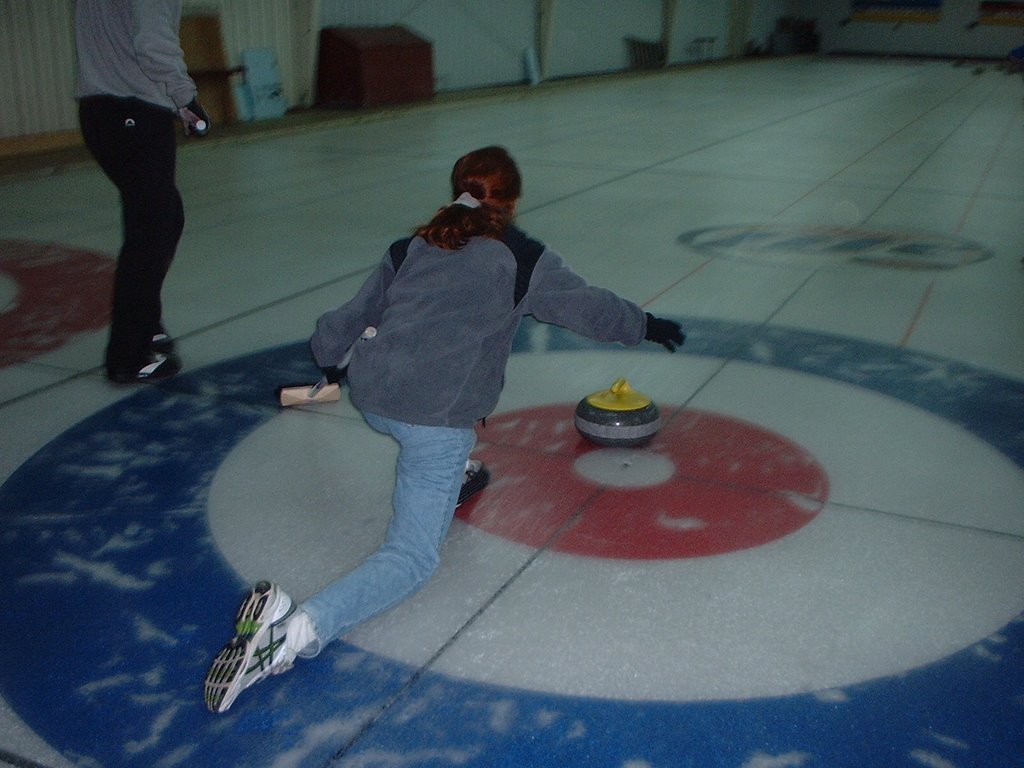
Up here Fargo way, we do things a bit differently. Turns out a morning at the sheet is a sacred ritual.


First, we started with a cup of bean water at the new Atomic Coffee.


Once we get to the sheet, it's time to work on our form. As you can see, sport's training in ballet really paid off.


Marshall and Gryffindor are working hard for Team Canada.


Incidentally, sport and I curled with department members during the interviewing process. While it didn't give us any "in" during our on-campus interviews (we weren't, and aren't very skillful), I would highly recommend trying to spend time with your potential future colleagues doing "native" things. Breaking out of the interview box and performing local activities makes it much easier to demonstrate that you are a good fit (not to mention, helping you figure out if you really want to be a part of that particular ecology). Sliding around on ice in the middle of Janauary may not sound like fun to some people, but doing this (rather than, say, obsessing how easy it is to simulate living somewhere coastal) really clarified our job priorities.

11.17.2006

Just a small question

Anyone else wonder what happened to the Foley "Investigation"? Just askin'...